
Verve Intelligent Personas & Simulations (VIPS) & Decisions of Consequence
VIPS are designed for decisions of consequence — giving you the superpower to have a customer in every decision of consequence you make.
Transcript
Welcome to The Match. Meet the minds behind the work. Insights from the best specialist and independent agencies, presented by StudioSpace.
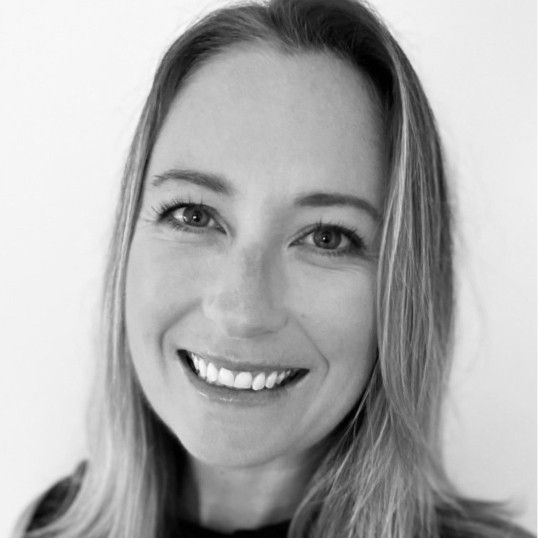
Today I'm joined by Rikki Pearce, Managing Director for APAC at Verve. Verve is a consultancy that combines AI with human and cultural insight to help organisations make better decisions of consequence. Rikki also leads the R&D lab at Verve, which encompasses their AI-powered Verve Intelligent Personas and Simulations proposition — which means, luckily for us, she's very much at the forefront of the AI-empowered insights industry and the revolution going on in that space right now.
What's flawed in how companies tend to make decisions today?
Probably a lot! But from an insights perspective, in an ideal world we would ask more questions. The insights industry has had some insoluble problems — time, speed, influence, among other things — and the tech revolution we're going through means we're able to solve some of these in ways we never could before. But we need to be doing it really well. And that's where Verve comes in.
Our Verve Intelligent Personas and Simulations — VIPS, as we affectionately call them — are designed for decisions of consequence and to give you the superpower to have a customer in every decision you're making.
We all say we should really involve customers in how we make decisions. But why is that such a hard thing to do for most organisations?
It's expensive. It's slow. Traditionally flawed. We've also got a respondent crisis in terms of panel fraud — research being a boring brand touchpoint. How do we get people to show up in a really meaningful way and bring that human truth into everything we're doing? That's been quite difficult in the past, given the velocity of decision-making. A lot of decisions get made without human insight. Or you're trying to scale your head of insights across a whole business — I remember being at Quantas and getting text messages from the SLT about this or that. It's really hard to scale a person. What we're able to do now is essentially do that. And as I said, you've got to do it well.
Help us demystify what's going on. There's a lot of talk around AI in research at the moment — synthetic personas, for example. What's your view on the landscape right now?
There's a lot of money coming in. We went to TMRE — the Market Research Event in Vegas — at the end of last year, which was great for getting a real sense of who's doing what, how, and where we sit in it. The way we've distilled it is that there are broadly four buckets, with some overlap.
The first is synthetic data — often talked about in terms of sample boosting. With the right inputs, we can create synthetic data sets, but usually the question is: I've got a hard-to-reach audience, how do I impute or bolster a data set? There are some really good players in that space.
The second is synthetic panels — much more controversial. Qualtrics has created one, but it uses client data. So if you're Nestle and you've been doing research on the Qualtrics platform, that data is now being used to inform synthetic respondents answering questions for Mars. There's a lot happening in the IP world there. On the other side, you've got Toluna, for example, creating synthetic panels with abstractions of their current panel respondents — but there's still an issue with the respondent crisis, and it's not particularly auditable at this point. That said, everything with AI is the worst it will ever be. It's improving exponentially, so it's an exciting space to watch.
Then there are digital twins. You'll hear a lot of people talking about digital twins of humans, but that's not really where they came from — they're more about systems. Trying to predict an individual is quite difficult, and a lot of companies in this area have moved away from that and gone more into the synthetic persona space, which is technically where we sit. Those personas are based on segments and subsegments, which gives a greater level of reliability.
That's broadly the landscape. I'm sure people will say I've missed things.
There are definitely quite a few different approaches emerging — easy to understand why people are often confused.
Exactly. And there's a lot within each of those buckets. We were at TMRE and people were asking what a "persona and simulation" was. When we said "synthetic personas," they said "oh, right!" We've since accepted we need to use that language, even though we really dislike it — we think it cheapens the product. We say we're at the silk end of synthetic.
Let's get into VIPS properly. Tell us more about what they are, how they work, and the advantages.
VIPS have been a lot of fun — and a lot of work. We've been building them for three and a half years. I'll do my plug: they're award-winning. We've won at SMR with Mars and Samsung, and I'm incredibly proud of them. I'm lucky to have my dual roles across APAC and North America in sales, and leading R&D — so I'm able to have a lot of confidence in the product. I'm a quant person, master's in stats, so I need to feel confident in what we're selling. And I certainly do.
What we've created with VIPS is something designed for decisions of consequence — not just directionally correct. The thing with AI is it's a very convincing liar. If you're only right 60% of the time, what decision can you actually make from it? We're very much about getting to 95% confidence in terms of predictive validity. And we're achieving that — we've done well over 100 tests, running them every month on every client instance, through an 8-stage process.
We've got specialist teams working on it, and everything we do is bespoke to our clients. This is not an off-the-shelf SaaS product — everything is done for you, with ongoing consulting support. That way we can see if an innovation team is asking questions about something we don't think there's enough confidence in, advise on that, and recommend what primary research needs to sit alongside it.
There's a virtuous circle: the primary research you do — the real human truth — continues to fuel the simulation. And people are showing up to do qual. There's AI-moderated qual now, which means you can do that at scale. Or if you've got high-net-worth participants, you can host a more exclusive event and use that to bring in the human insight that continues to evolve the simulations. It's a living organism, and it's scalable across the business.
Before we get into use cases, can you say a bit more about how the VIP approach differs from traditional human-based research? Pros, cons, major differences.
It's not a binary option — you still need both. What we're able to do is create a living asset that is always on, always available, and trained for your use cases.
A key difference is that VIPS aren't just a qualitative interface. We're able to do generalised linear regression, choice modelling, max diff — quant in the back end, basically — if the VIPS are trained for it and we've got the right data. That makes them scalable. It also means no research is ever lost, because it all sits together. In one sense, it's a way to get more scale and ongoing value from the human-based research you would absolutely still do.
So it actually amplifies the human research rather than replacing it.
Absolutely. Think about where CMOs are spending money on research — and where they're not. Creative testing, A/B testing on platform — all of that can now be run through audience expert personas or futures experts, and evolved when we get real-time feedback.
We also have a cultural layer. There's a gaming client in the US we're kicking off with next week — they need always-on micro trends from TikTok. So we're able to do cultural analysis from TikTok every weekend and update the cultural layer that way too. It's really dynamic. And there are no more 200-page decks sitting in a top drawer — which I'm very excited about, because I don't like writing decks.
We talked at the start about your focus on decisions of consequence. Tell us more about what that means and how this approach enables better decision-making.
There are lots of examples — innovation, concept testing, brand identity, opportunity spacing. If we look at it as a workflow, using a CCD framework: you start with opportunity spacing — knowing what's known — and you'd have a knowledge mode the team can work with. Then you move into audience experts or segment experts generating ideas for you to review. You can test those ideas with audience experts, or with experts focused on the future — sustainability, technology, whatever the industry calls for. That might be the point at which you want to go and talk to some real people, but you've already whittled down the ideas. Then you'd go back and refine with the audience experts to give you the confidence to go forward.
This is quite a different approach from what many clients are used to. How does a client get started with Verve Intelligent Personas? What does the experience look like?
It's really gaining momentum. It's a question we get a lot — and we're very conscious that people are buying this for the first time, including procurement teams. What we're seeing is that the US is much further ahead than other markets, with Europe and APAC coming along together. The experience typically starts with a small paid trial: one market, six segments, something like that. We get that running, roll it out, and then they might expand to 50 markets. It tends to be contained to start, with close support, and then scales out.
It also rolls out to different teams and use cases. For one Australian client, we created a customer strategy set of personas — really useful for the exec team, but not so useful for the campaigns team. So we're now creating performance marketing personas, behavioural in nature, so that team can target appropriately without testing on platform. For a global tech company, we've got multiple sets across different markets: an audience expert, an industry expert, and three or four futures experts that all work together in an innovation loop. It tends to grow based on the needs of the business.
For people watching or listening who are thinking about how to bring AI into their organisations to get better, more frequent, and higher-quality customer insight — what would you say to them about how to get started and make the case internally?
Well done for wanting to get started. At this point in time, every day you delay is another day you compound your disadvantage against competitors who are already doing this.
In terms of making the case internally, we think about three key stakeholders. The first is your CMO: think about all the insight you don't have at the moment. How can you get it? And how can you amplify the insight you do have to be enterprise-wide? I've worked in businesses trying to embed segmentations — it's incredibly difficult to scale the people who can do that.
For the CFO: what can we substitute out? What value can we create by generating insight where it never existed before? And honestly, the cost is comparable to running in-person focus groups — and often cheaper.
Then there's the CTO — and procurement. You'll immediately get questions about privacy, security, and PII. Make sure you're working with a credible provider that understands all of that. We've got our answers to SMR's 30 questions on this, which we can share. And we're now able to onboard large financial institutions in six weeks. This doesn't have to be a long CTO negotiation — you just need to be working with someone who can answer their questions quickly and confidently.
That's really helpful for framing how to think about bringing this into an organisation. Rikki, this has been a brilliant conversation. You've genuinely helped demystify what's going on with AI, research and insight right now, and given us practical tips on how to get going and generate value. I really loved the way you think about this as an opportunity to scale the power of insight within an organisation as you make consequential decisions. Thank you so much for making time and joining us.
Thank you for having me. Always a pleasure.
Want access to the best specialist marketing and digital services? Check out StudioSpace — the agency marketplace and procurement solution that gives big brands a faster, simpler, and more flexible way to access the most extraordinary agencies.
 StudioSpace 2026